How to grow herbs indoors: a calm, beginner-friendly guide
There's something grounding about having something alive in your kitchen. A small pot of basil by the window. A sprig of mint you can reach for without thinking. Growing herbs indoors is one of the gentlest entry points into gardening, and one of the most practical, because you'll actually use what you grow.
This guide is for anyone who has thought: "I'd love to garden, but I don't have the space, the time, or a green thumb." Herbs don't need any of those things. They need a bit of light, consistent water, and your attention for about five minutes a day. That last part is more than a chore. It's a practice.
Why herbs, why now
Herbs are forgiving in a way that bigger plants aren't. A missed watering day won't kill your basil. A cramped windowsill is fine. They grow fast enough that you see progress within days, which matters when you're just starting and not sure if you're doing it right.
There's also a sensory element that other plants don't quite have. Running your fingers along rosemary before you make dinner. Snipping mint into your water glass. These small acts pull you into the present in the same way mindfulness practices do. Gardeners have known this for centuries. The research is catching up.
What you actually need
You don't need a special grow light or a specific pot. Here's the honest list:
Light. A south or east-facing windowsill gets you most of the way there. If you have no natural light, a basic clip-on grow light (around $25) works well. You're not growing orchids.
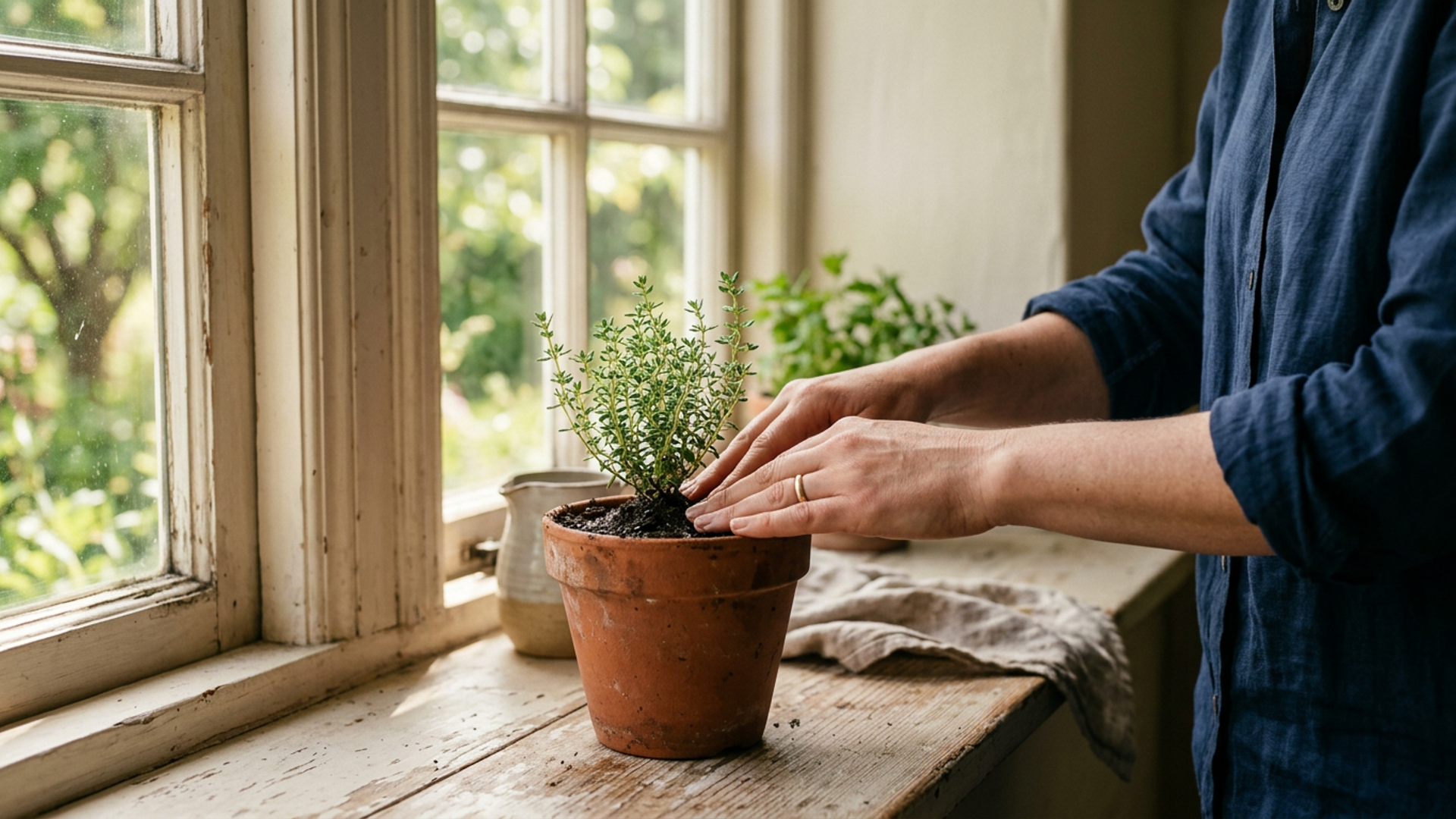
Containers. Anything with drainage holes. Small terracotta pots from a dollar store. A repurposed tin can with holes punched in the bottom. The pot doesn't matter. Drainage does. Herbs sitting in standing water develop root rot, and that's usually how first-time growers lose them.
Soil. Buy a small bag of potting mix, not garden soil. Garden soil compacts in containers and suffocates roots.
Water. Stick your finger about an inch into the soil. Dry: water. Still damp: wait. Overwatering kills more herbs than underwatering ever will.
That's it. Really.
The three herbs to start with
Basil. Fast-growing, fragrant, and useful in nearly every kitchen. It loves warmth and light. Pinch the flower buds as they appear to keep the leaves coming. Grows from seed in about two weeks, or skip straight to a starter plant from the grocery store.
Mint. Almost aggressively easy to grow. It spreads, so keep it in its own pot. Tolerates less-than-ideal light. Use it in tea, water, or dessert. Rubbing a mint leaf between your fingers smells like focus and calm, both of which tend to arrive together.
Chives. The quietest of the three. Low maintenance, fine with less light, and they bounce back fast after cutting. They'll make you feel like you know what you're doing, because you do.
Once these three are stable, you'll have enough confidence to branch out.
The five-minute daily check-in
Here's what nobody tells you about indoor herb gardening: the point isn't the herbs.
Or, the herbs are partly the point, but the bigger thing is the five-minute check-in you build into your day. You're not doing gardening. You're standing in your kitchen for a few minutes, checking whether the soil is dry, pinching any browning leaves, noticing that the basil has grown since yesterday. You're paying attention to something alive. Something outside the inboxes and group chats and to-do lists.
That's the calming mechanism researchers see in gardening studies: presence with a living thing. The herbs just make it accessible.
Some people keep a small journal nearby. A few sentences about what they noticed. How the rosemary smells today. Whether they remembered to water. It doesn't need to be significant. It just needs to be yours.
When things go wrong (and they will)
Yellow leaves. Usually too much water or not enough light. Let the soil dry out and move the pot closer to the window.
Leggy, stretched growth. The plant is reaching for light. Move it somewhere brighter or add a grow light.
Sudden wilting. Check the soil first. Bone dry: water immediately and move out of direct sun. Wet: you may have root rot. Pull it out, inspect the roots, and repot in dry soil if they still look okay.
White crust on the pot. Mineral buildup from tap water. Harmless. It happens with terracotta.
Most problems come down to two things: too much water or not enough light. Learn to read those two, and you'll keep herbs alive indefinitely.
What comes next
Once you have a stable herb collection, you'll find yourself reaching for the windowsill more than you expected. You might start wondering about a second plant. A small pot of lavender for the bedroom. Something with flowers.
That's how this usually goes. Not a big investment or a total lifestyle change, just a quiet accumulation of green things and the habits that grow around them.
If you're looking for more guidance as you go, the Full Bloom Studio membership is built around exactly this: practical growing knowledge combined with the wellness layer that makes it stick. Monthly resources, community check-ins, and support when you're not sure what's wrong with your basil.
But for now: get a pot, pick up some basil, put it by your brightest window.
That's enough to start.