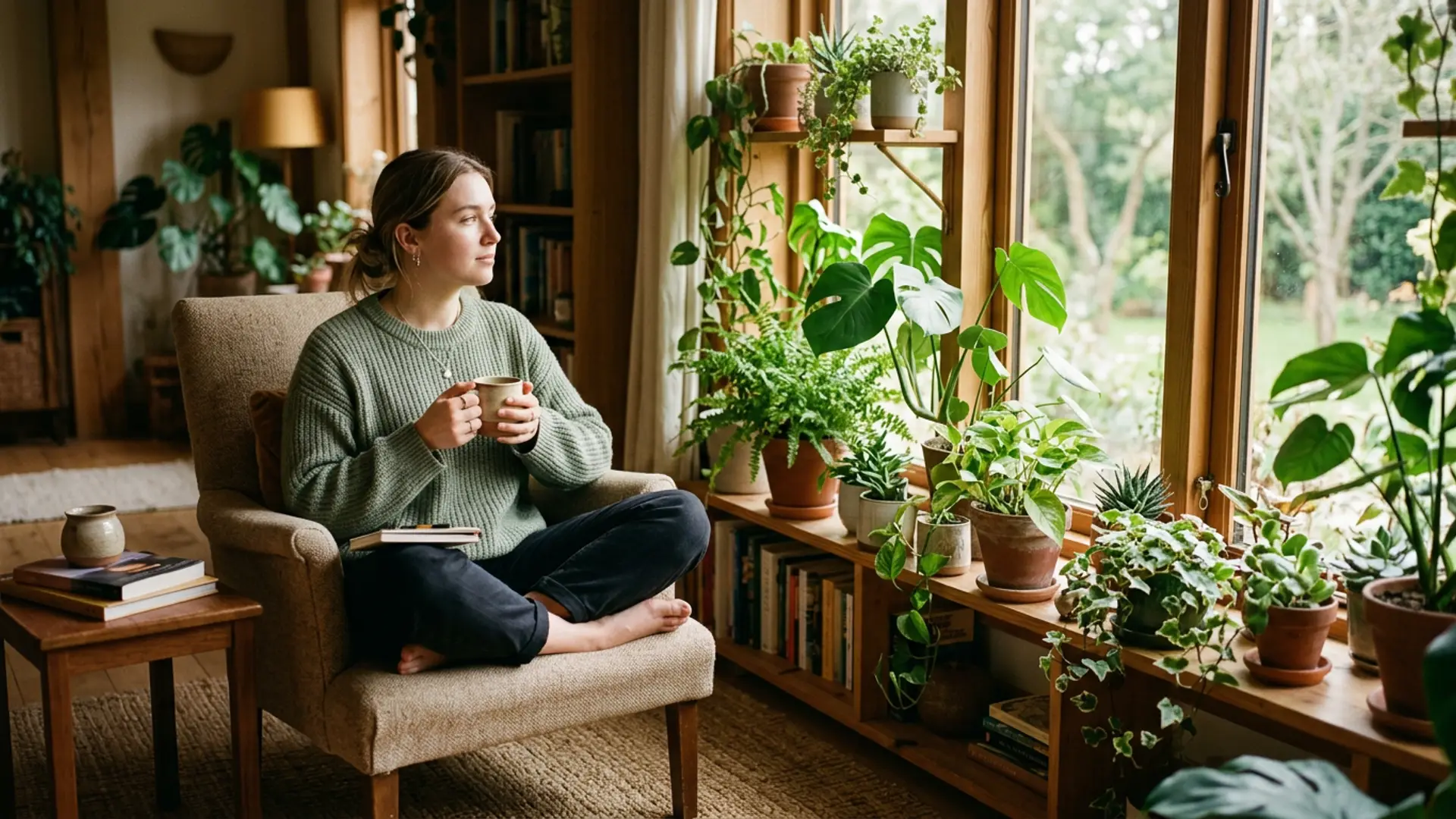
Five minutes with a plant really does lower stress. Here's why.
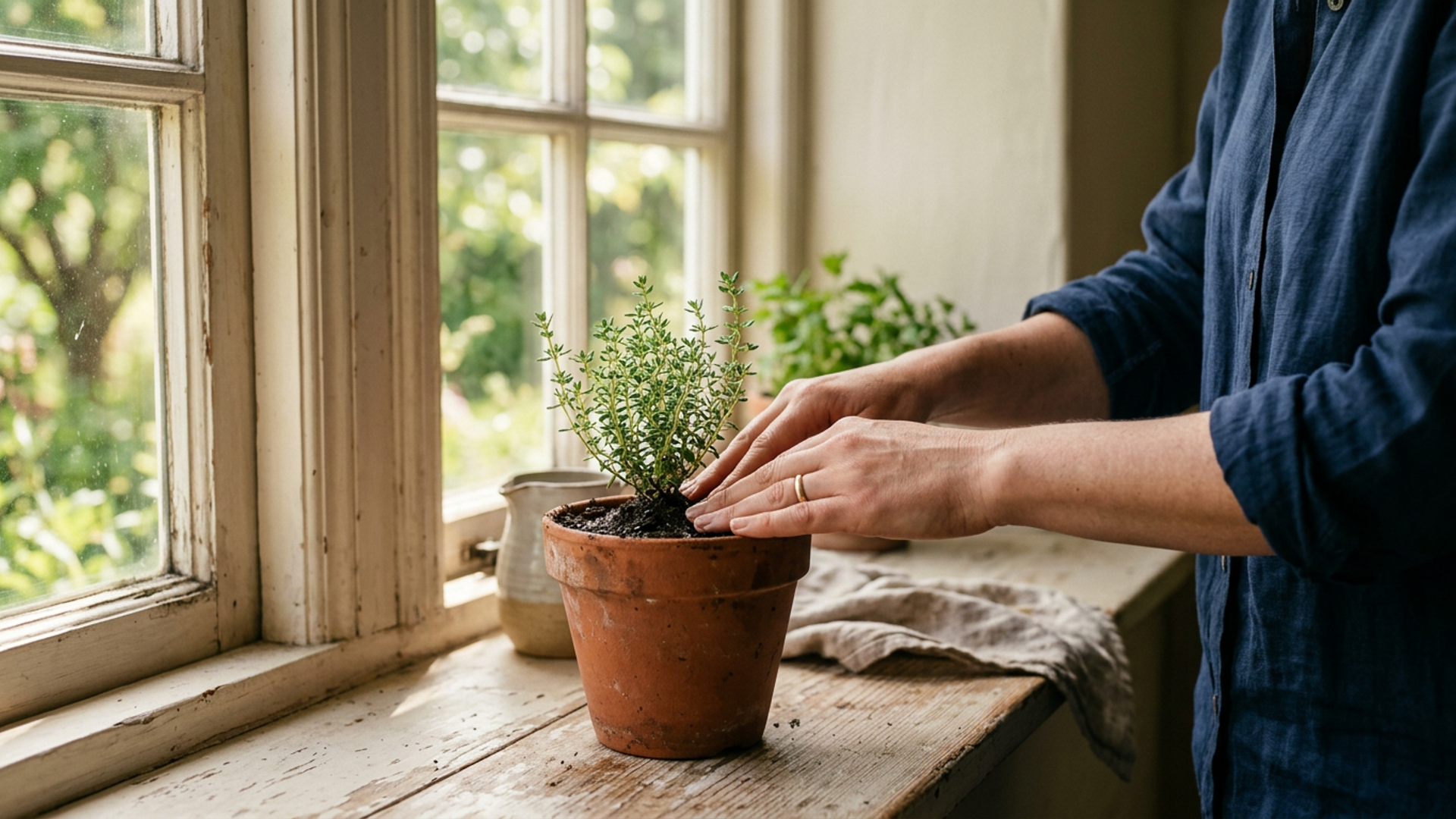
There's a moment that happens when you push your hands into soil. It's brief. You're not thinking about the email you owe someone. You're not running the mental loop of whatever went wrong this week. You're just there, noticing the temperature and weight of something real.
That moment is not a coincidence.
What the research actually says
The connection between gardening and stress relief has been studied for a few decades. The findings keep landing in the same place: time spent with plants, even in short windows, measurably reduces cortisol, the hormone your body releases under stress.
A study published in the Journal of Health Psychology found that gardening for 30 minutes lowered cortisol more effectively than reading indoors. Research on therapeutic horticulture consistently shows the same mechanisms: touching soil, noticing texture and scent, attending to something living. All of it activates the parasympathetic nervous system, the "rest and digest" state your body is supposed to return to after stress. It doesn't always get there without help.
What's notable is that the effect doesn't require a garden, a yard, or a dedicated hour. It shows up in small windows. Watering a single plant. Pinching off a dead leaf. Running your fingers through the soil in a pot on your windowsill.
Why it works where other things don't
Most stress relief advice is about stopping the noise: meditate, breathe, disconnect. Gardening does something different. It gives you a replacement for the noise. Something specific to pay attention to.
When you're tending a plant, there's a question in front of you: what does this need right now? The stem is leaning toward the window. The soil feels dry an inch down. A new leaf is coming in on the left side. Small things to notice. Things that have nothing to do with your to-do list. Your brain can only hold so much at once.
Researchers sometimes call this "soft fascination": the gentle pull of attention that natural environments create. Unlike the hard focus required for work, soft fascination lets your mind rest while still being occupied. It's the same quality of attention that makes a walk through trees feel different from a walk through a parking lot.
Five-minute rituals that hold
The key word is ritual, not routine. A routine is something you do because it's scheduled. A ritual is something you do because it returns you to yourself.
Morning check-in. Before your phone, before anything: go to one plant, look at it for a minute, touch the soil, notice if anything has changed. That's it. Two minutes, maybe three.
The watering pause. When you water a plant, slow down enough to watch the water absorb into the soil. Feel the weight of the pot before and after. This is not about technique. It's about using a small task to be somewhere instead of everywhere.
End-of-day deadheading. If you have flowers, removing faded blooms is oddly satisfying. Productive and calming at once. Your hands are doing something, your mind settles. Five minutes of this at the end of a hard day draws a line under it.
None of these require a lot. They require showing up to a small living thing for a few minutes and letting that be the whole of what you're doing.
One plant is enough
The stress relief doesn't scale with how many plants you have. One plant you pay attention to is worth more than a collection you manage.
This is worth saying plainly because there's a pull toward more. A bigger garden. A dedicated shelf of green. You don't need it. A pothos in a spot you pass every day. A single basil on the kitchen windowsill. A succulent you've had for three years and mostly ignore, except when you don't.
What matters is the quality of attention, not the quantity of plants. One moment of genuine noticing, this plant is growing, this plant needed water, this plant survived the week, is the whole thing.
The research points to it. The practice confirms it. Your garden can be one pot on a windowsill and it can still be a place to breathe.